

Best Times to Trade Forex for Kenyan Traders
⏰ Discover the best forex trading times for Kenyan traders. Learn how global sessions affect activity and get tips to time trades for success! 📈
Edited By
Isabelle Graham
Trading forex (foreign exchange) offers Kenyans a way to tap into the world’s largest financial market. Daily, more than $6 trillion changes hands globally, letting traders benefit from fluctuations in currency values. Whether you're a businessperson needing to hedge against currency risk, an entrepreneur keen on diversifying investments, or a newbie looking to earn with limited capital, understanding how forex works is essential.
At its core, forex trading involves buying one currency while selling another simultaneously. These pairs, like USD/KES (US Dollar vs Kenyan Shilling), move based on factors such as economic reports, interest rates, political events, and global trade dynamics. For instance, if the Central Bank of Kenya raises interest rates, the shilling might strengthen, affecting forex prices.
*"In forex trading, timing and knowledge make the difference between gains and losses. Educating yourself before risking real money is key."
Getting started requires picking a reliable forex broker. Look for firms authorised by the Capital Markets Authority (CMA) in Kenya or reputable international brokers with strong platforms and transparent fees. Safaricom’s M-Pesa integration often supports deposit and withdrawal options, simplifying fund movement.
Managing risk is another priority. Traders use stop-loss orders to limit potential losses and avoid placing too much of their capital on a single trade. For example, a trader might risk no more than 2% of their account per trade to stay safe.
Several basic strategies can improve your chances, such as:
Trend trading: Following the market direction with technical tools like moving averages.
Carry trade: Exploiting interest rate differences between currencies, popular when rates vary across countries.
Breakout trading: Entering trades when prices move beyond key support or resistance levels.
The forex market operates 24 hours during weekdays, overlapping global sessions from Asia, Europe, and the US. For Kenyan traders, this means opportunities outside regular Nairobi business hours, allowing flexible trading schedules.
In summary, trading forex in Kenya requires understanding currency dynamics, choosing the right broker, managing risks, and applying well-considered strategies. This guide will cover these points in detail to help you take confident steps in forex trading.
Understanding the forex market is the bedrock for anyone looking to trade currencies effectively. Forex trading isn’t just about guessing whether the dollar will rise or fall; it requires knowing how the market operates and who the key players are. For Kenyan traders, this knowledge helps navigate the volatile and fast-moving world of currency exchange and make informed choices about when to trade and with whom.
Forex trading involves buying and selling currencies in the global marketplace. Traders exchange one currency for another, hoping to profit from changes in their values relative to each other. For instance, a Kenyan trader might buy the US dollar against the Kenyan shilling if they predict the dollar will strengthen, allowing them to sell it later at a better rate.
The purpose of forex trading goes beyond mere speculation. It supports international trade and investment by enabling businesses and governments to convert currencies quickly. This continuous exchange drives a huge market whose daily turnover exceeds $6 trillion globally.
The forex market operates 24 hours a day across different financial centres worldwide—from Nairobi to London, New York, and Tokyo. This overlapping schedule ensures there’s always liquidity and opportunity, especially important for Kenyan traders who often prefer trading during their day hours when liquidity is higher and spreads tighter.
Large banks and financial institutions are the backbone of forex activity. They conduct huge currency transactions on behalf of commercial clients and for their own trading desks. Their operations influence currency trends since their trades move vast sums. For example, when Equity Bank or KCB Forex desks adjust their foreign exchange reserves, it can impact local currency availability and value.
Retail traders and brokers are growing in importance. Kenyan traders use brokers licensed by the Capital Markets Authority or global regulators to access the forex market with smaller sums. Platforms such as MetaTrader, combined with mobile-friendly features like depositing via M-Pesa, make forex trading accessible to everyday Kenyans. Brokers act as intermediaries, connecting retail traders to liquidity providers or institutional feed.
Governments and central banks, like the Central Bank of Kenya (CBK), play a stabilising role. They intervene in forex markets to control inflation, stabilise the shilling, or boost exports. For example, CBK may sell foreign reserves when the shilling weakens too much, helping to curb excessive currency swings that could hurt Kenyan businesses and consumers.
Knowing who shapes the forex market—from big banks to everyday retail traders and central banks—gives Kenyan traders a clearer picture of market dynamics. This understanding is vital for making smart trading decisions rather than guessing blindly.
This foundation prepares you to approach forex trading with confidence, aware of the forces that push and pull currency prices every day.
Understanding what moves currency prices helps traders predict market behaviour and make informed decisions. Currency values do not shift randomly—they respond to a mix of economic data, political events, and trader sentiment. For Kenyan traders, recognising these factors is key to spotting opportunities and managing risks.

Interest rates are a major force behind currency pricing. When a country raises interest rates, it attracts foreign investors seeking higher returns, boosting that currency's demand. For example, if the Central Bank of Kenya hikes rates, the Kenyan shilling may strengthen as investors look for better yields compared to other currencies. Conversely, lower rates can weaken a currency by making investments less attractive.
Inflation affects currency value by influencing purchasing power. Moderate inflation shows a growing economy, but high inflation can erode confidence. Kenya's inflation rising beyond expected levels may prompt traders to sell shillings, anticipating the Central Bank will need to adjust policies, possibly leading to volatility in forex pairs involving KSh.
GDP growth and employment data offer a snapshot of economic health. Strong GDP growth signals a vibrant economy, often strengthening the local currency. Likewise, low unemployment suggests economic stability, encouraging foreign investment. For instance, positive job reports in the US commonly strengthen the dollar, affecting forex pairs like USD/KES.
Elections and policy changes can cause forex markets to swing due to uncertainty or new economic directions. Kenya's election periods often see currency jitters as traders anticipate shifts in fiscal or monetary policy. A surprise policy change, say on taxation or trade, can prompt rapid currency movements reflecting market sentiment.
Conflicts and trade agreements matter because they affect stability and economic outlooks. Regional tensions or disruptions in East African trade corridors can weaken involved currencies. Meanwhile, fresh trade deals, like those within the East African Community, can boost investor confidence, supporting currencies of member states by promising increased cross-border commerce.
Role of trader psychology is central in forex trading. Fear and greed often drive sudden price swings beyond fundamentals. For instance, a fearful mood during global uncertainty can lead to a flight to safe-haven currencies like USD or JPY. Kenyan traders who can identify such swings and control their emotions tend to avoid costly mistakes.
Common technical analysis tools help traders read market patterns. Tools like moving averages, Relative Strength Index (RSI), and support/resistance levels are widely used to spot potential entry and exit points. For a Kenyan trader, blending these tools with awareness of local economic news can improve timing and outcomes in trades.
Success in forex trading comes from understanding both hard data like economic reports and soft factors like trader sentiment. By paying attention to these drivers of currency prices, you stand a better chance of making smart trades in Kenya's dynamic forex market.
Interest rates influence currency demand through investor returns.
Inflation shapes currency trust and monetary policy outlook.
GDP and jobs reflect economic health, impacting currency strength.
Political events bring uncertainty, causing forex volatility.
Conflicts and trade deals affect economic stability and investment.
Trader psychology often fuels rapid price shifts.
Technical tools assist with timing trades amid market noise.
Mastering these factors puts you ahead in the Kenyan forex trading scene, allowing you to anticipate market moves with confidence.
Starting forex trading in Kenya requires a clear understanding of the local market environment and practical steps to enter safely. This section helps you navigate essential elements like choosing a trustworthy broker, opening an account, and grasping key trading terms. Getting these basics right sets a solid foundation for smoother trading experiences and better decision-making.
Broker regulation and licensing ensure your money is safe and the market is fair. In Kenya, reputable brokers often have licences from recognised authorities such as the Capital Markets Authority (CMA) or international bodies like the Financial Conduct Authority (FCA) in the UK. A licensed broker must follow rules meant to protect traders from fraud or unfair practices. For example, a broker without proper regulation might offer unrealistic leverage or delay withdrawals, causing unnecessary losses.
Trading platforms provide the interface where you place trades and track currency movements. Well-known platforms like MetaTrader 4 or MetaTrader 5 are popular among Kenyans because they are user-friendly and support mobile trading—very useful if you want to trade on the matatu or during your break. These platforms also offer tools for charting and technical analysis, essential for spotting good trade opportunities.
Deposit and withdrawal options including M-Pesa are crucial in Kenya since many traders rely on mobile money for convenience. Choosing a broker that accepts M-Pesa and other local payment methods means you can fund your account quickly without complicated bank transfers. It also makes withdrawing profits straightforward, avoiding hefty fees or delays often seen with international wire transfers.
Account types suited for beginners usually have low minimum deposits and simpler features. For instance, many brokers offer micro or mini accounts that allow you to trade smaller amounts while learning. This way, you don’t risk too much capital upfront. Some accounts might also come with demo options, letting you practise without using real money.
How to fund your account via Kenyan payment methods focuses mainly on mobile money and bank transfers. Given the dominance of M-Pesa in the country, brokers that let you deposit via M-Pesa make the process smoother. Besides speed, this method removes the barrier of needing a local bank account or credit card. Kenyan traders can also use Paybill or Lipa Na M-Pesa services where brokers provide unique numbers for payments.
Pips and lots are fundamental terms. A pip means the smallest price movement in a currency pair, usually 0.0001 for most pairs. For example, if USD/KES moves from 110.5000 to 110.5100, that’s a 1 pip change. A lot represents the size of a trade. A standard lot equals 100,000 units of the base currency, but beginners often use mini lots (10,000 units) or micro lots (1,000 units) to manage risk.
Leverage and margin let you control bigger positions with less capital. For example, with 1:100 leverage, a KSh 10,000 deposit lets you trade KSh 1,000,000 worth of currency. While this can increase profits, it also magnifies losses, so managing margin carefully is vital to avoid being stopped out prematurely.
Spread and commissions are the costs of trading. The spread is the difference between the buying and selling price, essentially the broker’s fee. Some brokers charge a fixed spread, while others offer variable spreads that change with market conditions. Commissions are additional fees per trade; not all brokers charge these. For Kenyan traders, low spreads and transparent fees are best, as they eat less into your profits.
Starting forex trading in Kenya is about making smart choices early—select a reliable broker, open the right account, and familiarise yourself with key terms to trade confidently and securely.
This practical approach reduces risks and helps you build a solid base for success in the forex market.
Risk management and trading discipline form the backbone of successful forex trading, especially in Kenya's dynamic market. Many traders jump into forex chasing quick profits but end up losing due to poor risk control or emotional decisions. Managing risks carefully protects your capital, while disciplined habits increase your chances of consistent gains.
Setting proper stop-loss and take-profit levels helps you control potential losses and secure profits automatically. For example, if you buy the USD/KES pair at 110 and place a stop-loss at 109.50, your position will close if the price falls to that level, limiting your loss to 50 pips. Similarly, placing a take-profit at 111 locks in gains once the price reaches this target. Kenyan traders often underestimate this step, leading to bigger-than-intended losses on unexpected market moves.
Avoiding over-leverage is equally crucial. While leverage lets you control large positions with little capital, using too much can wipe out your account quickly. Suppose you use 1:100 leverage on KS0,000; a 1% adverse move means losing your entire deposit. Many new traders in Nairobi or Mombasa may be tempted by high leverage offers but risk blowing up their accounts fast. Stick to modest leverage ratios like 1:10 or 1:20 to preserve your trading capital.
Keeping a trading journal sharpens your strategy by tracking every trade’s entry, exit, reasons, and outcomes. For instance, writing down why you bought EUR/USD at a certain point and reviewing it later helps you spot patterns or mistakes. Kenyan traders who maintain journals often identify habits like emotional exits or ignoring news releases, allowing them to adjust and improve.
Sticking to your strategy despite emotions is a tough challenge. The forex market can trigger fear or greed, causing traders to deviate from plans—like adding to losing positions or holding winners too long. Consider Mary from Kisumu, who once doubled her stake after a loss, hoping to recover quickly but ended losing more. Discipline means accepting losses and following your rules strictly. This steadiness builds confidence and long-term success.
In forex, the market moves fast and unpredictably. Your best defence is solid risk management combined with the discipline to follow your trading plan without exceptions.
By mastering these principles, Kenyan traders can better navigate volatility, protect their funds, and build skills steadily over time.
Beginners in forex trading often struggle to find a clear path through the complex market movements. That’s where popular trading strategies come in—they offer tested approaches that can support consistent decision-making. Using these strategies helps Kenyan traders navigate the forex market with more confidence, reducing guesswork and emotional mistakes.
Identifying trends is one of the simplest yet most effective ways for beginners to trade forex. A trend shows the overall direction in which a currency’s value is moving over time—either up, down, or sideways. For example, if the USD/KES pair has been rising steadily over days or weeks, a trader recognising this can choose to buy before prices climb further. Spotting trends helps avoid buying at the wrong time, which could cause losses. Traders should look at charts across different timeframes, such as daily and hourly, to confirm the presence of a trend.
Using moving averages supports trend following by smoothing out market noise. A moving average calculates the average price over a set number of days—say 20 or 50 days—making it easier to see the general price direction. For Kenyan traders, applying a 20-day moving average on the EUR/USD chart, for instance, can highlight short-term trends. When the price stays above the moving average, it points to an upward trend and buying opportunities. Conversely, prices below the moving average might signal a downward trend. Moving averages also serve as support or resistance levels, where traders can place stop-loss orders to manage risk.
Support and resistance levels refer to price points where currencies tend to stop moving in one direction and reverse. Support is the price floor that the currency rarely falls below, while resistance is the ceiling that it struggles to break. In practise, Kenyan traders might notice that GBP/KES bounces back every time it approaches a certain support level, say 140 KSh. Trading within this range involves buying near support and selling near resistance, taking advantage of predictable price swings. This technique works particularly well in stable or sideways markets where trends are not clear.
Oscillator indicators like the Relative Strength Index (RSI) or Stochastic Oscillator help confirm overbought or oversold conditions in a range-bound market. Oscillators move between fixed values, typically 0 to 100, signalling when a currency might reverse its direction. If RSI shows above 70, the currency on focus may be overbought—an alert to sell or hold off on buying. If it dips below 30, the currency may be oversold, suggesting a potential buying opportunity. These tools give Kenyan traders a clearer signal in choppy markets where price isn’t trending strongly.
Trading around economic releases is a popular method for those watching Kenya’s economy or major global events closely. Reports like Kenya’s GDP data, US Federal Reserve interest decisions, or inflation rates can cause big swings in currency prices. For instance, if the Central Bank of Kenya unexpectedly raises interest rates, the Kenyan shilling might strengthen sharply. Traders who plan to enter or exit positions around these news bursts can profit from rapid price moves.
How to interpret market reactions after news events is vital. Not every positive report results in a rising currency; sometimes markets anticipate news in advance or react in unexpected ways. For example, even if Kenya's inflation falls, the shilling may weaken if traders expected a bigger drop. Learning to read market reaction patterns helps Kenyan traders avoid traps and confirm if a new trend is likely to develop after a big economic announcement.
Successful forex trading depends heavily on understanding and applying strategies that fit the market conditions. Kenyans entering the forex scene should start by practising these popular strategies with small amounts before scaling up.
By mastering trend following, range trading, and news-based approaches, you build a solid foundation to grow your forex trading skills and hopefully your returns.
⏰ Discover the best forex trading times for Kenyan traders. Learn how global sessions affect activity and get tips to time trades for success! 📈
Learn Deriv Forex trading in Kenya 🇰🇪 with this practical guide. Discover platform features, trading basics, smart strategies, and essential risk tips 📈💡
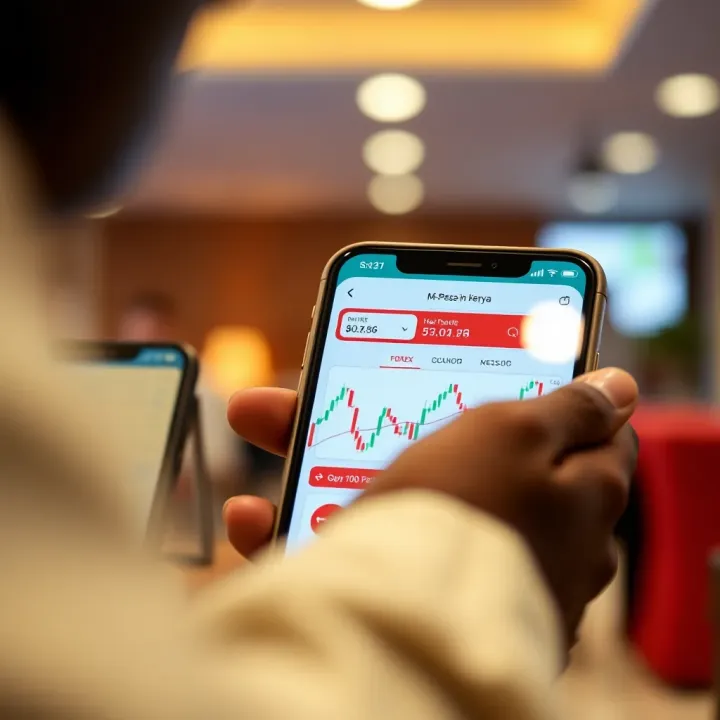
Discover top forex brokers in Kenya accepting M-Pesa for easy deposits and withdrawals. Trade smoothly with trusted platforms tailored for Kenyans 📈💼📱

Explore the Asian forex session timing and strategies tailored for Kenyan traders 📈. Learn how to spot key opportunities and manage trades effectively during this period.
Based on 9 reviews